
How Do Push-Pull Hand Controls for Cars Work?
As adaptive driving technology continues to evolve, push-pull hand controls have become one of the most widely used solutions for drivers with lower-limb disabilities. These systems allow drivers to operate the accelerator and brake using hand movements, offering greater independence, safety, and mobility.
This article explains how push-pull hand controls work, who they are designed for, and why they are a trusted solution in adaptive driving worldwide.
What Are Push-Pull Hand Controls?
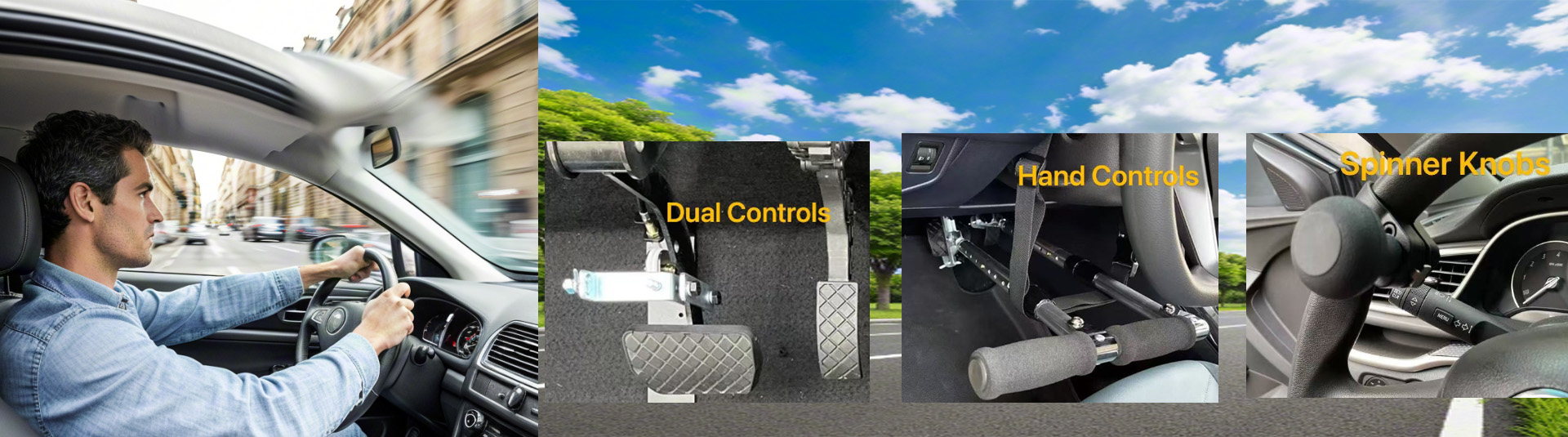
Push-pull hand controls are mechanical driving aids installed inside a vehicle that enable drivers to control acceleration and braking using a single hand-operated lever.
They are commonly used by:
Drivers with lower limb disabilities
Amputees or paraplegic drivers
Drivers with limited leg strength or mobility
Rehabilitation and mobility vehicle users
These systems are widely accepted due to their simple operation, reliability, and intuitive driving feel.
How Do Push-Pull Hand Controls Work?
The operation of a push-pull hand control system is straightforward and natural:
Pull the lever toward you → Accelerate
Push the lever forward → Brake
The hand lever is mechanically linked to the vehicle’s original accelerator and brake pedals using precision cables or rods, ensuring smooth and proportional control.
Importantly, the original pedals remain fully functional, allowing the vehicle to be driven normally by non-disabled drivers when needed.
Key Components of a Push-Pull Hand Control System
A typical push-pull hand control system includes:
Hand control lever (mounted near the steering wheel)
Mechanical transmission system (cables or rigid linkages)
Brake connection module
Accelerator linkage
Mounting brackets and safety hardware
High-quality systems are engineered to minimize play, ensure fast response, and maintain consistent braking force under all driving conditions.
Is It Safe to Use Push-Pull Hand Controls?
Yes. When properly designed and installed, push-pull hand controls are extremely safe.
Professional-grade systems:
Do not interfere with the vehicle’s original braking system
Allow immediate and direct braking response
Are tested for long-term durability and emergency braking scenarios
Comply with international adaptive driving safety standards
Many systems are approved for use in daily driving, rehabilitation programs, and driving assessments.
Can Push-Pull Hand Controls Be Installed in Any Car?
Most push-pull hand control systems are designed to be vehicle-universal, meaning they can be installed in:
Automatic transmission vehicles
Passenger cars, SUVs, and vans
Left-hand or right-hand drive vehicles
Installation is typically performed by certified mobility installers or adaptation specialists, ensuring compliance with local regulations and safety requirements.
Why Choose Push-Pull Hand Controls?
Compared with electronic or complex adaptive systems, push-pull hand controls offer several advantages:
Simple and intuitive operation
High mechanical reliability
Lower maintenance requirements
Cost-effective adaptive solution
Easy removal or transfer to another vehicle
For many drivers, push-pull systems provide the best balance between control, safety, and affordability.
SY Dual Controls – Reliable Adaptive Driving Solutions
At SY Dual Controls, we specialize in the design and manufacture of hand controls for disabled drivers, including professional push-pull systems for passenger vehicles.
We work closely with:
Vehicle adaptation companies
Mobility equipment installers
Rehabilitation vehicle specialists
OEM and private label partners
Our hand control systems are engineered for safety, ease of installation, and long-term performance, helping drivers regain confidence and independence on the road.
👉 To learn more about our adaptive driving solutions, visit www.sydualcontrols.com or contact our team for product details and cooperation opportunities.


Mobil: + 8613671909874

