
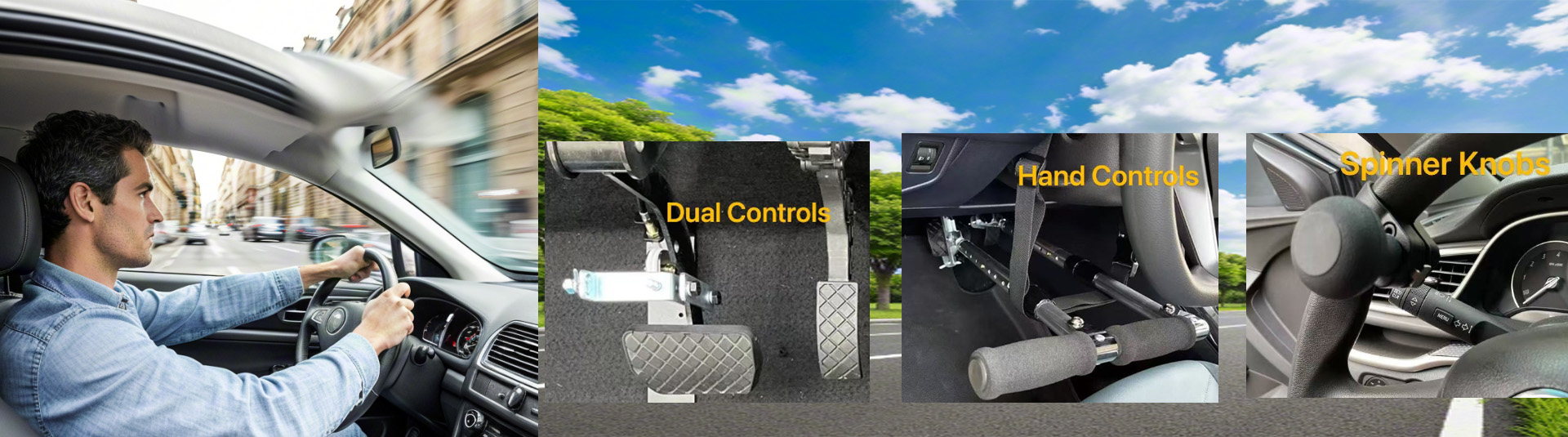
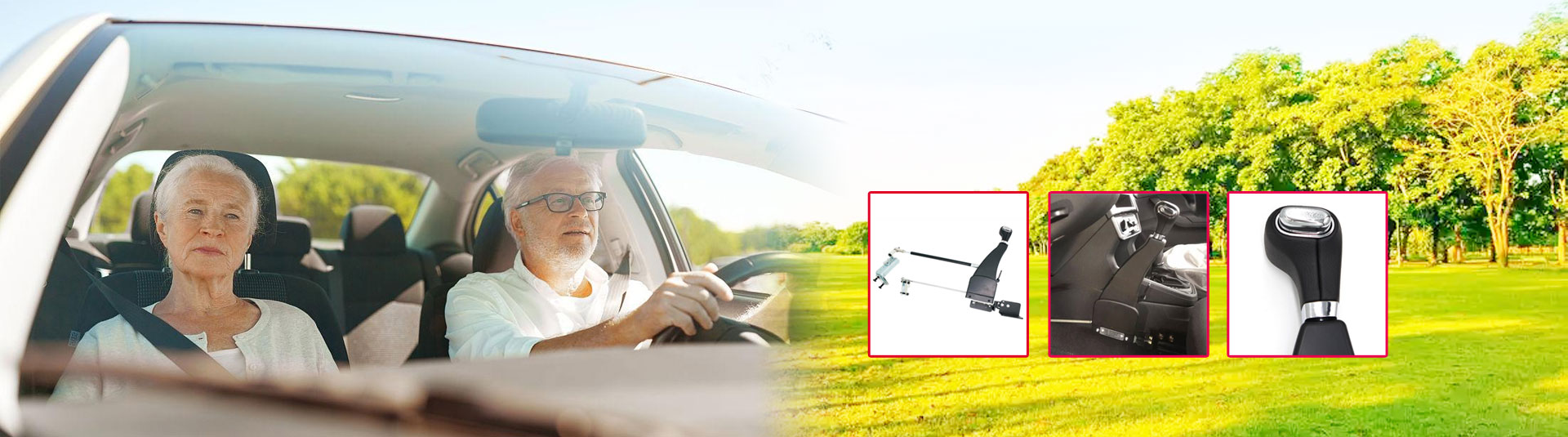
Professional Guide to Manual Driving Aids by Shanghai Songyu
You use manual car controls when you need help operating the pedals with your hands. These adaptive driving devices give you greater freedom and safety. In 2026, brands such as Shanghai Songyu Technology Co., Ltd. will help you drive using manual controls. You can choose the manual controls that best suit your needs and enjoy driving with them.
Key Takeaways
• Manual controls help people with leg disabilities safely drive their cars using their hands. This gives them more freedom and independence.
• You can choose mechanical or electronic manual controls. Pick what suits you best and is easy to use. Mechanical controls are simple to operate. Electronic controls offer more features.
• Consult a mobility advisor before choosing manual controls. You need training and practice to drive safely.
What are Manual Car Controls?
Purpose and Benefits
Manual controls help you drive if you cannot use your feet. These devices allow you to steer, accelerate, and stop using your hands. People with lower limb disabilities use manual controls to drive safely. You do not need your legs to drive with manual controls — you can perform all driving actions with your hands.
Manual controls le
Type of Manual Control | Description |
Mechanical Manual Controls | Connect directly to the car’s brake and accelerator using simple push-pull movements. |
Push-Pull Manual Controls | Pull to accelerate, push to slow down. Easy to learn for new drivers. |
Right-Angle Manual Controls | Push down or at an angle. Reduces strain on your wrist and shoulder. |
Push-Rock Manual Controls | Rock the handle to accelerate or slow down. Ideal for small hand movements. |
Push-Twist Manual Controls | Use push and twist actions. Keep your hands close to the steering wheel. |
Electronic Manual Controls | Use electronic signals. Sensitivity can be adjusted for comfort. |
Drive-by-Wire Manual Controls | Advanced electronic controls. Ideal for drivers with limited strength. |
Touchpad or Joystick Controls | Require very little hand movement. Ideal for limited range of motion. |
t you drive like everyone else. You can take part in more activities.You feel more independent and less isolated with manual controls.You can customize manual controls to your needs, making driving easier.Safety is a priority. Manual controls are designed to give you full control.You feel proud and free when driving to work or events.Manual controls improve quality of life. You can go to work, travel, and visit family without assistance.
Accessibility in Modern Cars
Manual controls help people with physical disabilities drive modern vehicles. You can accelerate and slow down using your hands. Most people use their left hand for manual controls, while their right hand steers and performs other tasks. This setup helps you drive if your legs do not function properly.
Manual controls fit many lifestyles. They can be installed in different vehicles. Custom setups ensure safety and comfort. You gain the freedom to travel and the confidence to drive. You can visit new places. Manual controls adapt to your needs, so you can enjoy driving every day.
How Manual Controls Work
Mechanical Systems
Mechanical manual controls use levers and rods that connect your hands to the car’s pedals. You push or pull a lever to control the accelerator and brakes. This system lets you feel direct feedback from the car. Many people choose mechanical manual controls because they are easy to use and reliable. They do not require complex technology, are widely available, and generally cost less to install.
Mechanical manual controls are great if you want a traditional driving feel. They are ideal for beginners. You use your own strength to move the levers, helping you feel connected to the vehicle. Many drivers appreciate the simple design.
Electronic Systems
Electronic manual controls use sensors and wiring to help you drive. You move a small device, and the system sends signals to the engine and brakes. You do not need much strength to operate electronic manual controls, making driving easier and less tiring — especially useful on long trips.
You can customize electronic manual controls to your needs. Many designs support hand comfort, and safety features help protect you while driving. Electronic manual controls offer a personalized driving experience. They cost more and require specialist installation, but provide many advanced options.
Tip: Choose the system that matches your strength and comfort.
Here is a table showing the main differences between mechanical and electronic manual controls:
Feature | Mechanical Manual Controls | Electronic Manual Controls |
Operation | Uses levers to move pedals | Uses electronic signals for control |
Physical Effort | Requires more force | Requires less force |
Ease of Use | Simple, good for beginners | Smoother, may require practice |
Customization | Limited | Many options available |
Installation Cost | Lower | Higher |
Relevance | Traditional feel | Ideal for long trips or limited strength |
Types of Manual Controls
In 2026, you can choose from many types of manual car controls. Each type helps you drive safely and comfortably. The best choice depends on your needs and driving style. Below is a table of the most common manual controls and their main features:
Push-Pull Manual Controls
Push-pull manual controls are very popular. You pull the lever to accelerate and push it to slow down. The system feels natural and intuitive. Many drivers prefer this type because it is robust and simple.
You get easy acceleration and braking with a single lever.The design is durable and performs well in daily use.Many new drivers choose push-pull manual controls for their first experience.Shanghai Songyu Technology Co., Ltd. offers models with this system, providing safe and smooth driving.
Tip: If you want something simple, push-pull manual controls are a great choice.
Right-Angle Manual Controls
Right-angle manual controls use a handle that you push down or at an angle. This design reduces fatigue in your wrist and shoulder, allowing you to control the car with less effort — great for long journeys.
The handle is easy to grip if you have limited movement or dexterity.Push forward to brake and down to accelerate.This type works well if you prefer your hand to stay in a natural position.You will need practice to avoid activating both functions at the same time. Many drivers find this system comfortable for daily driving.
Push-Rock Manual Controls
Push-rock manual controls use a rocking motion. Push the handle forward to brake and pull back to accelerate. This style keeps your hand in a natural position.
You only need small hand movements for full control.The handle can be removed for easier entry and exit.This system is ideal if you want to reduce pressure on your hand and wrist.You can use push-rock manual controls for smooth, careful driving. Many drivers appreciate the comfort and safety this style provides.
Push-Twist Manual Controls
Push-twist manual controls combine push and twist motions. You twist the handle to accelerate and push it to brake. This design keeps your hands close to the steering wheel for better control.
Feature | Advantage |
Easier Operation | Twisting is less tiring than pushing or pulling. |
Support Handle | Helps you twist comfortably on longer trips. |
Increased Legroom | Provides more space on the driver’s seat. |
No Need to Hold the Handle | Reduces fatigue during long journeys. |
Better Pedal Feel | Maintains smooth and consistent acceleration. |
Easier Braking | Makes stopping the car simple and safe. |
Push-twist manual controls are helpful if you have limited hand strength. This system offers comfort and control every time you drive.
Ring Accelerator Controls
Ring accelerator controls fit around the steering wheel. You press the ring to accelerate. The design is neat and easy to use.
Many drivers enjoy the simple, intuitive feel.The ring works well with flat-bottom steering wheels.You can keep both hands on the wheel while accelerating.The sleeve rotates freely for precise acceleration control.You can use ring accelerator controls for smooth driving, especially when steering and accelerating at the same time. Many users appreciate the long-term support from manufacturers.
Steering Wheel Auxiliary Handles
Steering wheel auxiliary handles help you steer with one hand. These aids work well with manual controls, allowing you to keep one hand on the accelerator or brake.
You can use rotary knobs, handles, or prosthetic hook supports.These handles are useful if you have a weak grip or limited wrist strength.You can turn the wheel easily, even with a prosthetic hook.Some advanced models let you control other car functions such as headlights and windscreen wipers.
Shanghai Songyu Technology Co., Ltd. offers the SY-W3 and SY-W2
 steering wheel auxiliary handles. These products give you better control and comfort while driving.
Note: Steering wheel auxiliary handles make driving safer and more comfortable for many people.
Drive-By-Wire Manual Controls
Drive-by-wire manual controls use advanced electronic systems. You control the car using sensors and wiring instead of mechanical parts, giving you precise feedback and smooth operation.
By 2026, drive-by-wire systems will use sensors and electronic dampers to copy the feel of traditional controls. You get fast response and better control, even with limited strength. Many drivers enjoy the improved driving experience and safety.
Shanghai Songyu Technology Co., Ltd. offers pull-type electronic accelerator and floor-mounted electronic accelerator options. These products use the latest technology to help you drive with confidence.
Touchpad and Joystick Controls
Touchpad and joystick controls require very little hand movement. You can use these controls if you have limited range of motion or strength.
You can operate the car with a simple touch or small movement.These controls are easy to customize to your needs.Many systems let you adjust sensitivity for extra comfort.
Touchpad and joystick controls work well with pull-type electronic accelerators and floor-mounted electronic accelerator systems, giving you a modern, flexible driving solution.
Dual-Control Brake Systems
Dual-control brake systems allow another person to assist with braking. These systems are useful in driving schools, for carers, or within families.
You can use a universal dual-control brake for passenger vehicles.High-capacity dual-control brakes work for heavy vehicles.These systems add an extra layer of safety and control.
Shanghai Songyu Technology Co., Ltd. offers the SY-B1 universal dual-control brake and the SY-B10


 high-capacity dual-control brake. These products help you learn to drive or assist others safely.
Safety Tip: Dual-control brake systems are important for training and shared driving situations.
There are many types of manual controls to choose from, each offering special benefits for different needs. You can find the right system to help you drive safely and comfortably every day.
Who Benefits from Manual Controls?
Drivers with Disabilities
Manual controls are useful if you cannot use your legs properly. Many people with reduced mobility use these devices to drive safely. You may need manual controls if you have lost a leg or struggle to move your feet. Common groups include:
• Drivers with mobility difficulties
• Amputees
• Those unable to use standard pedals
Manual controls help you stay independent and active, letting you drive and join in daily life.
Elderly Users and Those in Rehabilitation
Elderly people may struggle to use their legs for driving. Some older drivers and people in rehabilitation use manual controls to keep driving. A recent study showed that only 0.4% of elderly drivers used manual controls. While the number is low, these devices help those in need. You can use manual controls to feel confident and stay mobile during recovery.
Driving Schools and Carers
Driving schools and carers use manual controls to help new drivers learn. Certified driver rehabilitation specialists assess your needs and recommend the right equipment. You can take training to learn how to use manual controls in real-life situations.
Adaptive driving equipment matches your needs with standard cars.Manual controls provide greater safety and support for you and your family when learning or travelling.
Getting Started with Manual Car Controls
Assessment and Consultation
You need an assessment before using manual controls. A mobility advisor checks your needs and driving style to help you choose the best manual controls for your car. Key steps include:
• Meet a mobility advisor for a driving assessment.
• Tell them about your daily driving and vehicle type.
• Get advice on suitable manual controls for your needs.
This process helps you get a system that fits your lifestyle and keeps you safe.
Training to Drive with Manual Controls
You need practice to learn manual controls. Many driving schools now offer special courses for people who need adaptive equipment. You can join programs that help you build confidence and skill. Options include:
• Training for people with disabilities.
• Special courses for manual controls, pedal modifications, and steering aids.
• Personalized instruction from schools that understand your needs.
Training helps you learn to accelerate, brake, and steer using your hands.
Tip: Practice in a safe area before driving on busy roads.
Installation and Safety Standards
Proper installation keeps you safe. Always use qualified experts to install manual controls. The table below shows important safety rules:
Requirement | Description |
Installation | Installed by qualified experts following manufacturer instructions. |
Vehicle Compatibility | Only for cars with power brakes, power steering, and automatic transmission. |
Manufacturer Approval | Written approval required for any modifications. |
Functionality | Must allow full use of accelerator and brakes without blocking other parts. |
Safety for Able-Bodied Users | Should not affect normal pedal use. |
Neutral Position | Must return to neutral after use. |
Following these steps helps you stay safe and comfortable when driving with manual controls.
Comparing Mechanical and Electronic Manual Controls
Ease of Use
Most people want manual controls that are simple to operate. Mechanical manual controls use levers and rods — you push or pull to move the car. Many people like this because it uses easy movements. Electronic manual controls use newer technology. You move a small device, and the car responds smoothly. Some drivers take time to learn electronic controls, but feel more comfortable after practice.
Customization and Adaptability
You can modify manual controls to suit your needs. Mechanical manual controls come in many styles, such as push/pull or right-angle. Electronic manual controls let you adjust responsiveness — you can make them faster or slower. Some systems let you tune them for city or highway driving. You can add steering aids such as knobs or handles to make steering easier.
• Mechanical Manual Controls: Choose push/pull or right-angle styles.
• Electronic Manual Controls: Adjust how quickly or slowly they respond.
• Steering Aids: Add knobs or handles for easier steering.
Maintenance and Reliability
Mechanical manual controls last a long time. They have simple parts that you can check and repair without special tools. Electronic manual controls use sensors and wiring; problems should be checked by a qualified person. Both types work well if properly maintained. Always follow the manufacturer’s advice for cleaning and checking your manual controls.
Choosing the Right Controls
Key Selection Factors
When choosing the right manual controls, think about what works best for you. Main points to consider:
• Understand control types: mechanical or electronic — each feels different to drive.
• Check your abilities: think about your hand and arm strength. Strong hands may suit mechanical controls; less effort may mean electronic controls are better.
• Check vehicle compatibility: make sure manual controls fit your car.
• Focus on safety features: choose manual controls with built-in safety functions.
• Plan your budget: manual controls are available at different price ranges.
You should also think about finger function, comfort, and health conditions. Choose a style that feels good and meets your current and future needs.
Practical Tips
Follow these steps to make a smart choice:
1. Book a driving assessment with a professional. They can help you find the best manual controls for your needs.
2. Try different adaptations in demonstration cars. This helps you see what fits before you decide.
3. Explore funding options. You can seek support from charities, grants, or special programs.
4. Start lessons in a quiet area. Practice helps you build confidence and skill.
Tip: Take your time and ask questions. The right controls can make driving easier and safer for you.
Maintaining Manual Car Controls
You need to keep your manual controls in good condition. Check them regularly to stay safe while driving. Clean parts and look for loose bolts or worn components. If the accelerator or brakes feel different, call a professional immediately. Most manual controls need an annual check by a qualified technician to ensure proper function and avoid problems on the road.
There are many manual controls to match your needs. Talk to a specialist before choosing. Stay safe and enjoy driving with manual controls. Explore new technologies and ask questions. Start your journey toward greater freedom on the road today.
FAQ
How long does it take to learn to drive with manual controls?
You can learn basic manual controls in a few hours. You may need more practice to feel confident and safe on the road.
Can you install manual controls in any car?
You can install manual controls in most cars with an automatic transmission. Always ask a professional to check your car before installation.
Do manual controls affect normal pedal use?
You can still use the pedals.Manual controls do not block normal driving.Able-bodied drivers can use the car as usual.


Mobil: + 8613671909874

